The street of Willow Row, now home to Derby College and the sports centre, had previously been associated with the industry. However, with harsh industrial conditions comes a harsh and unforgiving society, housing several public houses and inns whilst also being where 103 people called their home in 1847[1]. Not including the Gaol and House of Corrections where many slum dwellers were convicted of alcohol-related crime and violence some being more despicable than others even going as far as murder. This all-in turn casts light on the more hidden aspects of English slums and in particular, Derby.
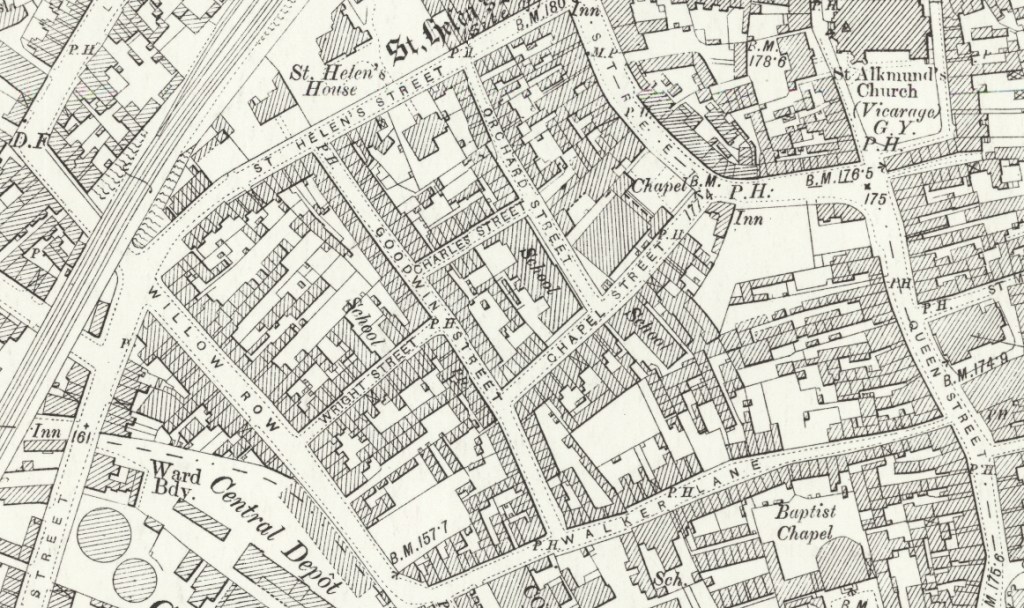
This page intends to convey ideas surrounding the middle-class moralist ideals around what the street should look like compared to a more accurate representation of where slum dwellers call home. The portrayal of the ideal Willow Row was not the only way in which middle-class ideals were shown, they can also be seen in the inadequate care of slum residents in places such as Gaols and public houses at the hands of ineffective law enforcement and policies. As previously mentioned, the association, between Willow Row and the ale house, known more commonly back then as the public house or Inn, is not to be understated with there being four pubs located a stone’s throw from Willow Row itself.[2] This association led to numerous occasions where the pub, in particular the Windmill if not the centre, then associated with some form of criminality.
References
[1] Geneageek. (2021, November 21). The Slums of Derby. Geneageek.https://geneageek.com/the-slums-of-derby/
[2] The illustrated History of Derby’s Pubs Craven, Maxwell. The illustrated History of Derby’s Pubs, New ed., Breedon, 2002 pp 60, 142, 159, 165
 Derby's Dark Corners