The issue of water throughout the nineteenth-century is constantly problematic, especially concerning its relationship to the different groups and classes within society. While each class has its own distinct relationship with water and its supply, the two most prominent groups concerned are arguably the industrious classes, and government representatives and officials. Through this page the relationship between these two groups, and ultimately their turbulent relationship with water will be assessed, to distinguish the key problems concerning water within nineteenth-century Derby, and the role taken by the government to tackle the problems. This page focuses on the ‘Derby Improvement Scheme, 1878’ set out by the local government, which aimed to better the condition of the Derby slums.[1]
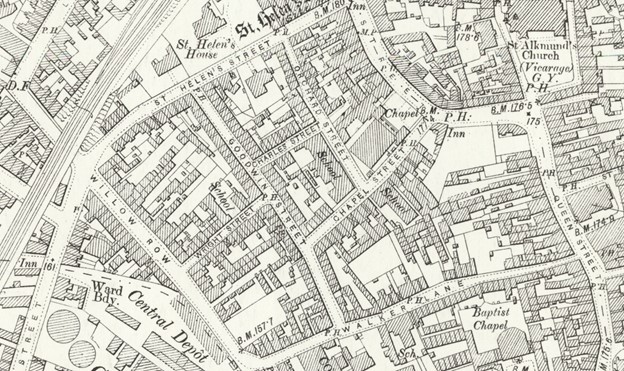
Figure 1 The ‘Derby Improvement Scheme, 1878’, was a local government scheme presented to parliament in the following year of 1879. The scheme, and thus corresponding document, was supervised by the City Mayor, Aldermen and Burgesses of the ‘borough’, which in this case refers to Derby itself, who collectively acted as both surveyors for the scheme, as well as a local government. The scheme sets out the ‘unhealthy’ areas within Derby, those which require improvement for public safety, as well as plans for ways in which to improve these areas. It is not uncommon within both government schemes and reports of living spaces to be described as ‘unhealthy’, though it is significant to note that these areas are distinct within their own right, and as such have their own problems.[2] The main suggestion within the scheme itself is the acquisition of the land dictated, and the staggered demolition of housing and buildings, with the intention to resell or lease all land. The scheme quotes that:
‘All dwelling-houses to be erected in accordance with this Scheme shall be well and substantially built…with a proper water supply, and with proper drainage and other Sanitary appliances and apparatus, to the satisfaction of the Local Authority’.[3]
The document is then rounded off, with a breakdown of the estimated total of funds required throughout the scheme, totalling over £37,000, which is estimated to be over two million pounds in today’s society.[4]
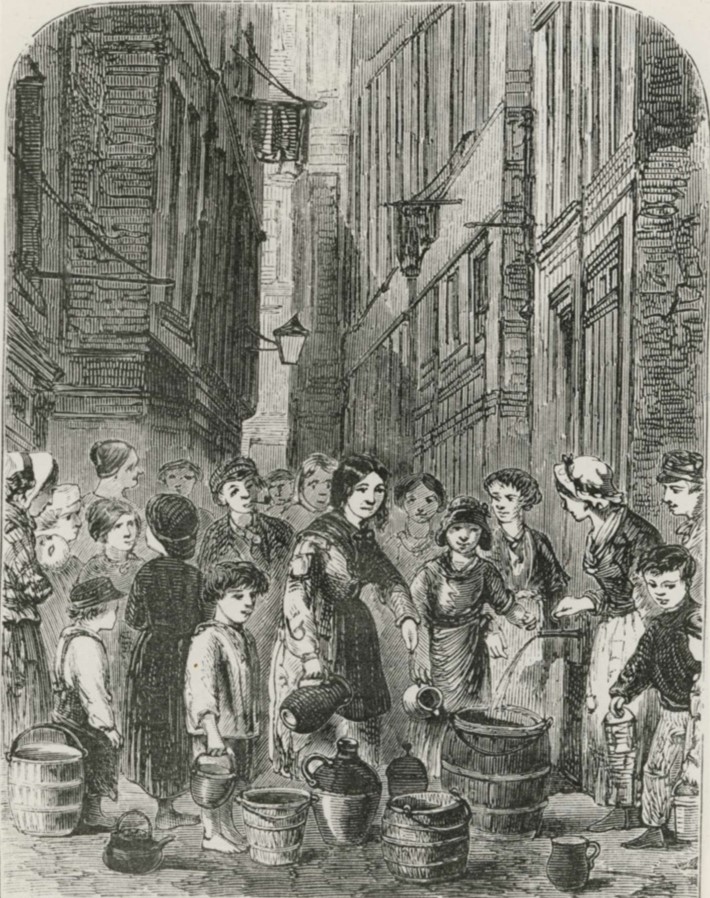
The immediate water supply to the industrious classes within Derby came through the use of water pumps and directly sourced river water. Due to the location of this housing network, the River Derwent, which to this day runs through the centre of Derby, was within easy access, and river water was commonly used by inhabitants. The water from the Derwent, however, was not necessarily safe, as in most industrious cities’ rivers were used as a cesspool, and there was little attempt to purify the water before use or consumption.[5] Within these housing networks, there were communal water pumps, however, these also came with their own set of issues. In most cases, there was a significant wait for the water from pumps, along with the major issue that the water was not much safer than that produced from the rivers, and was ultimately unsanitary and unfit for consumption and use. In a Derby telegraph report, residents confessed the horrific nature of their provided public water supply. It was noted by the journalist that ‘residents reported that milk would turn to curd when mixed with water from the communal pump’.[6] Legislative responses to the problems concerning water were determined by the local government, and as such drastically varied throughout the country.[7]
The issue of poor sanitation and water supply can be traced back to many correlating issues concerning housing and overcrowding. Throughout the course of the early to mid-nineteenth century, the population in most industrious towns and cities doubled, however, the level of housing did not increase at a corresponding rate.[8] This meant that the now doubled population were crammed into housing that was fit for a population half their size, causing extreme overcrowding and poor sanitation through the inadequate water supply. The poor-quality housing and overcrowding called for better water supply to not only reach the newly increased population but to aid with the sanitation of living spaces, where disease can easily be spread.
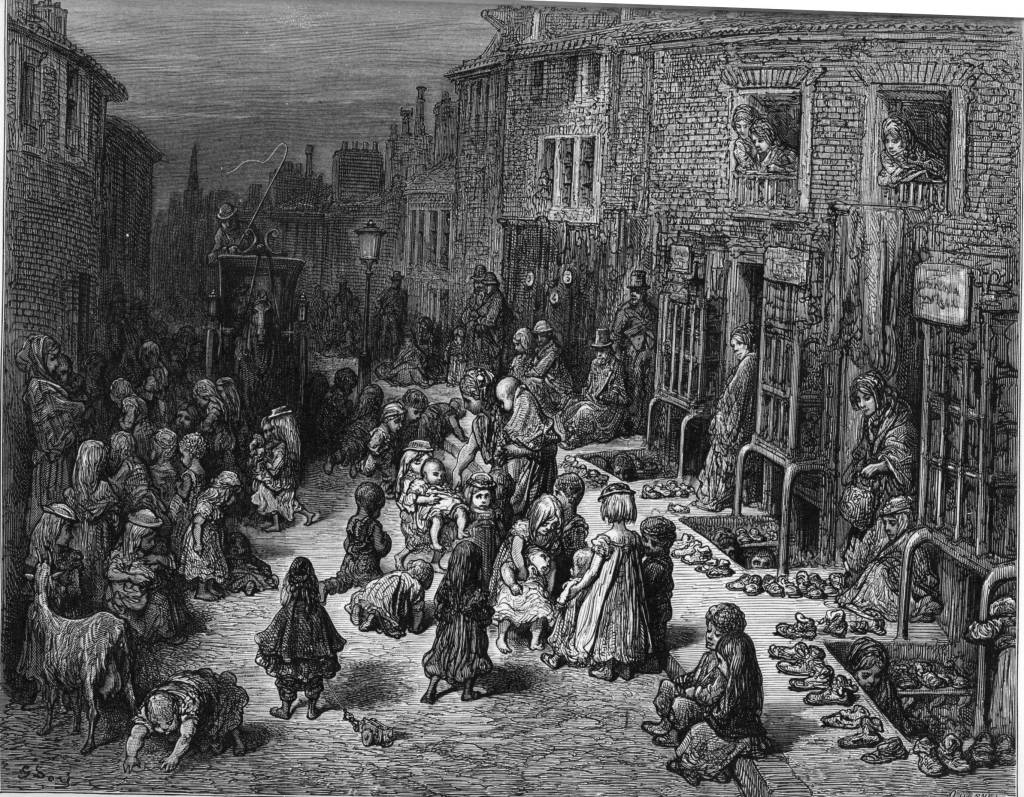
During the nineteenth-century, there was a shift in attitudes towards the role that government played within society. Throughout this period, there was a significant increase in government handling of key issues, including increased influence and control over housing and water. There has been considerable debate by historians as to the cause of this transition, which ultimately led to the growth of the Victorian State. Theorist A.V Dicey credits the changing role of government to the influence of developing principles within society, the strength of public opinion, and the significance of influential theorists and philosophers, such as Jeremy Bentham.[9] This new transition had an impact on the role of both national and local government, causing new reform and responsibility which is demonstrated through the creation of this scheme.
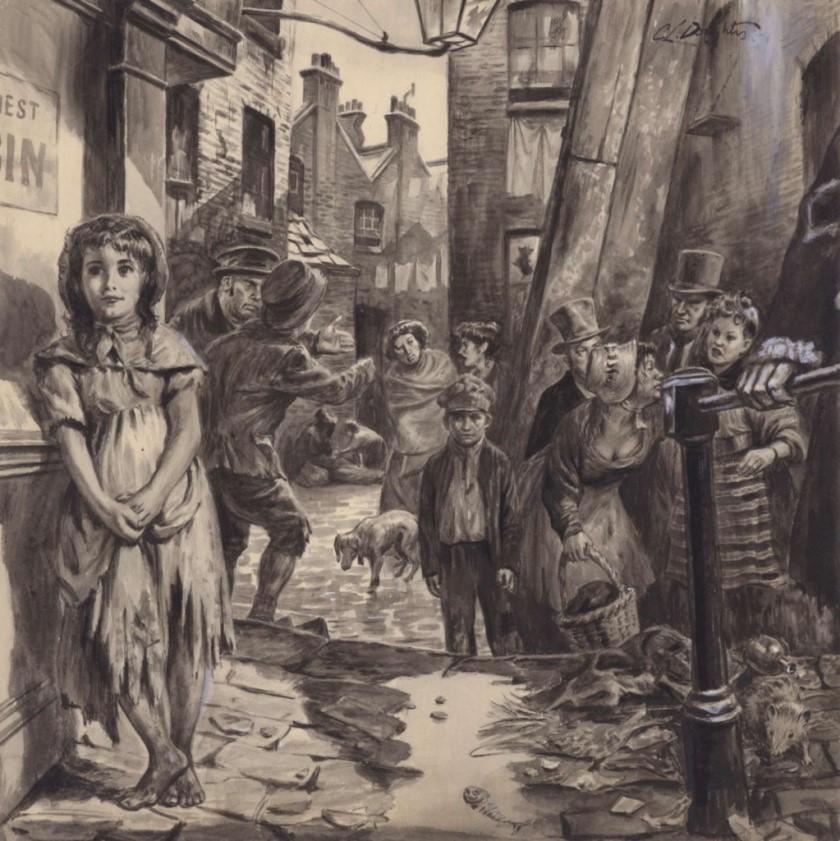
While the proposed modifications within the scheme show an attempt by the local government to understand and tackle some of the problems faced by those of the industrious classes within Derby, ultimately the proposal demonstrates a lack of knowledge of local government, to the realities and issues faced within the city. As with many government proposals, the legislation within the scheme is not clearly shown within documentation accessible to the public, instead unclear criteria and legislative measures are documented within the report. The document fails to clarify details to the public, such as the issue of housing in the period of demolition, though it is stated that adequate temporary housing will be made available. Although the scheme does tackle the issue of poor-quality housing within the highlighted areas, the issue of overcrowding within these spaces is not addressed. While the scheme states that local government will hold legislation over the production of these new houses, with regard to quality assurance, there is no stipulation or criteria surrounding the increase in housing necessary to ensure that the current circumstances within these areas do not repeat themselves. Overall, the scheme shows a failure by the local government to understand the realities and issues faced by the industrious classes within Derby, as well as a lack of understanding of how the issues impact the environment of the City.
[1] Derby Local Studies Library archive, 35916/BA614, ‘Borough of Derby Scheme’, 1878
[2] Nevell, M., ‘LEGISLATION AND REALITY: THE ARCHAEOLOGICAL EVIDENCE FOR SANITATION AND HOUSING QUALITY IN URBAN WORKERS’ HOUSING IN THE ANCOATS AREA OF MANCHESTER BETWEEN 1800 AND 1950’, Industrial Archaeology Review 36.1 (2014): pp. 48-74
[3] Derby Local Studies Library archive, 35916/BA614, ‘Borough of Derby Scheme’, 1878
[4] ‘Currency converter’, The National Archive (2017). Accessed online: https://www.nationalarchives.gov.uk/currency-converter/ Date accessed: 11 January 2023
[5] Ferguson, T. “Public Health in Britain in the Climate of the Nineteenth Century.” Population Studies 17. 3 (1964): pp. 213–24
[6] ‘The slums of Derby’, Geneageek, 23 October 2016. Accessed via: https://geneageek.com/the-slums-of-derby/Date accessed: 10 January 2023
[7] Symonds, J., ‘Dirty Old Town? Industrial Archaeology and the Urban Historic Environment’, Industrial Archaeology Review 27.1 (2005): p.64
[8] Symonds, ‘Dirty Old Town?’, p.64
[9] Goldman, L., Science, Reform, and Politics in Victorian Britain: The Social Science Association 1857–1886 (Cambridge: Cambridge University Press, 2002): p.29
Illustrations:
Figure 1: Unknown artist, ‘The Old West End of Derby’, 1899, Geneageek. Available online: https://geneageek.com/the-slums-of-derby/ Date accessed: 10 January 2023
Figure 2: Unknown artist, ‘The Water supply in Fryingpan Alley, Clerkenwell, 1864’ Bridgeman Education. Available online: https://www-bridgemaneducation-com.ezproxy.derby.ac.uk/en/asset/276001/summary?context=%7B%22route%22%3A%22assets_search%22%2C%22routeParameters%22%3A%7B%22_format%22%3A%22html%22%2C%22_locale%22%3A%22en%22%2C%22filter_text%22%3A%22victorian+water+poor%22%7D%7D Date accessed: 10 January 2023
Figure 3: Dore, Gustave., ‘Dudley Street, Seven Dials’, Victorian Web. Available online: https://victorianweb.org/history/london/7dials.html Date accessed: 10 January 2023
Figure 4: Doughty, C.L., ‘Victorian Slum Scene’, Bridgeman Education. Available online: https://www-bridgemaneducation-com.ezproxy.derby.ac.uk/en/asset/3641521/summary?context=%7B%22route%22%3A%22assets_search%22%2C%22routeParameters%22%3A%7B%22_format%22%3A%22html%22%2C%22_locale%22%3A%22en%22%2C%22filter_text%22%3A%22victorian+water+poor%22%7D%7D Date accessed: 10 January 2023
 Derby's Dark Corners