The Temperance Movement was a fluid organisation that existed in Britain throughout the nineteenth century, which aimed to resolve social issues by encouraging the abstinence of alcohol and its consumption. Whilst the members of this movement had different methods that they regarded as appropriate to practically encouraging sobriety, it is important to note that ‘the most salient feature of the British Temperance movement is how little it was able to accomplish.’[1] This is partly due to the heavily embedded status that alcohol had already adopted within British society and its significance upon the growing industrial British economy.
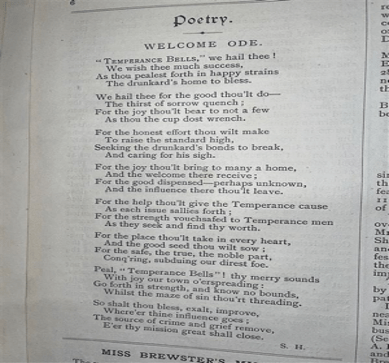
The production of alcoholic drinks has always been a major industry and employer in most economies where their consumption is permitted. The importance of this industry is recognised through tax revenues that are provided by large alcohol-orientated companies.[2] Despite this heightened economical realisation of the importance of the drinking industry, this did not shatter efforts by the different temperance societies to implement policies that stimulated tee-totalism and offer rehabilitation procedures to those who had fallen within the realms of alcoholism. The effects of alcohol, partnered with the influence of the temperance movement, helped portray alcohol as a ‘societal evil’ and a main cause of poverty, disease, and other social issues.[3] The importance of removing this social drawback, as members of the temperance movements interpreted it, can be highlighted in the ‘Temperance Bells’ poem where it is implied that if the temperance objectives are achieved then society would be rid of social issues such as crime and grief.[4]
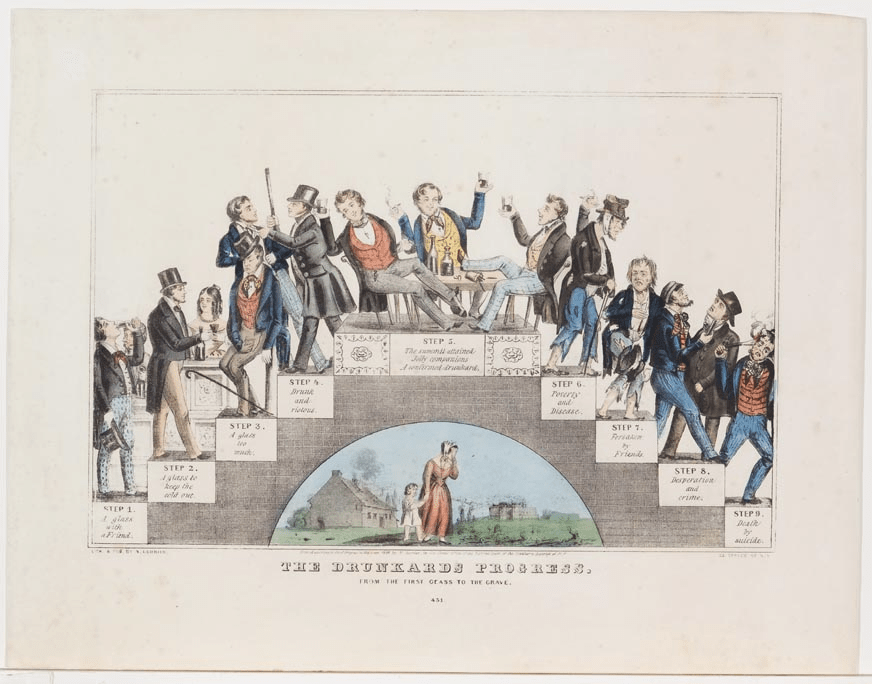
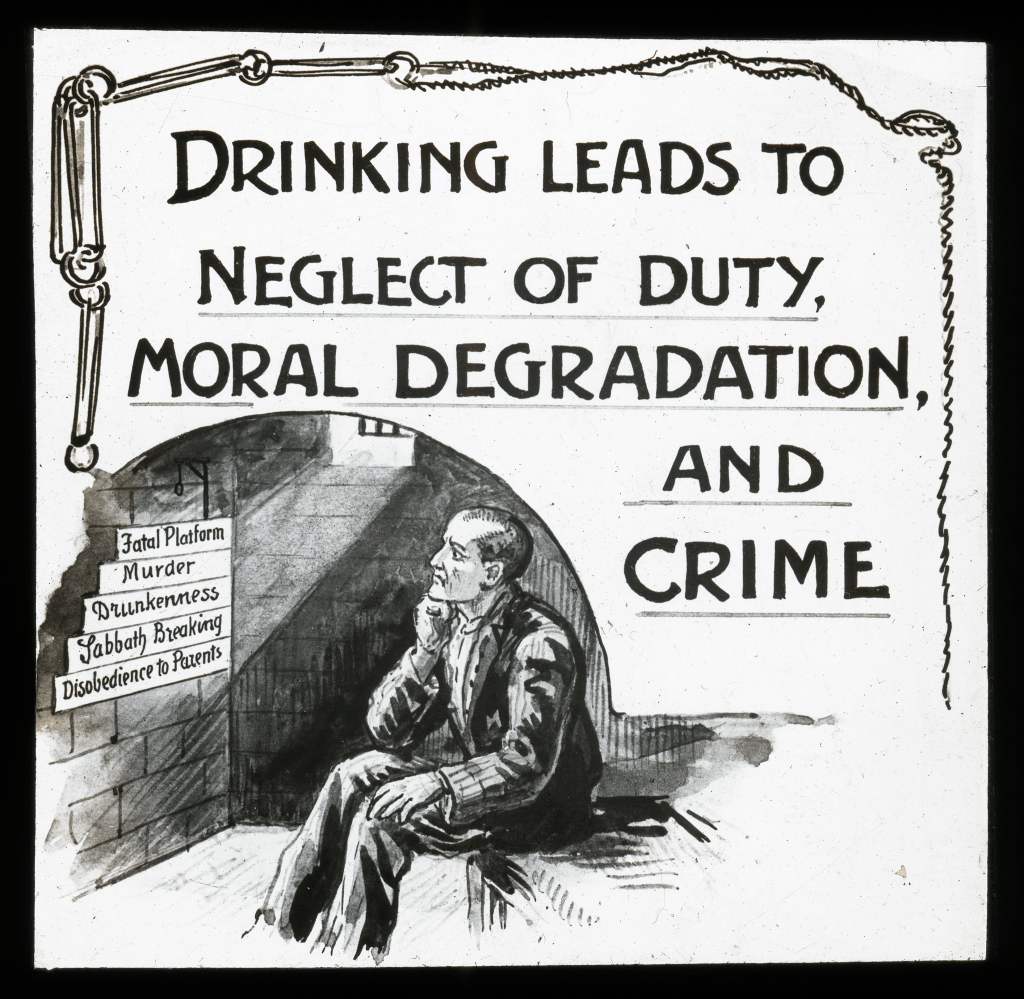
Throughout the course of the nineteenth century, beer was consumed by all different sectors of society. However, it was during this century that beer witnessed a shift in public consumption, one that transferred from all areas of civilisation to one that was now heavily associated with the poorer members of the public.[5] This portrayal of the poor can be related to temperance movements of the nineteenth century which often regarded the poor as simply prone to weakness in the face of the evil temptation of the spirit; this stereotype that the poor adopted was utilised by members of temperance organisations to raise awareness and support for their cause to rehabilitate those less capable of independent reform.[6] Whilst this acknowledgement did receive wide public attention and support, it is also important to note that many of those associated with the working class felt attacked by these parallels made between alcohol consumption, evilness, and crime. This is because many of those related to the working-class region of society referred to drinking as central to working-class culture, and as Brian Harrison has stated, ‘to abandon drink was to abandon society itself.’[7] Although these members of society referred to these accusations as humiliating and degrading, this did not discourage the attempts made by temperance movements to successfully rehabilitate the public through the removal of alcohol. Local examples of temperance efforts can be witnessed in Derby where a man who worked as a Sunday school teacher had fallen ‘into temperance’ and ended up giving up all his religious duties. However, through the influence and assistance of the local temperance movement, he later signed a pledge with a police court missionary and was able to return to his services.[8] Additionally, another example of temperance endeavours was the rehabilitation of a local man who was charged with attempted suicide. It was said that he was previously a well-rounded man with a good occupation but that he later succumbed to heavy drinking and ultimately lost sight of himself. Through the help of the local temperance society and other communal efforts, he was sent to live in Birmingham and through the assistance of the church army, he made good progress and became more ‘orderly.’[9] These attempts to rebuild people’s lives that had been destroyed by alcohol helped promote emphasis and significance to the foundation of temperance ideology. The importance of rehabilitation is further reflected in the ‘Temperance Bells’ poem where it was insinuated that strength shall be ‘vouchsafed to temperance men, as they seek and find thy worth.’[10] This admission emphasises that not only will they possess the strength required to remove alcohol from their daily lifestyle but that they are also able to restore their humanity and value through tee-totalism and develop an ‘ethical backbone.’[11]
In addition to local-specific cases of rehabilitation, communal temperance efforts can be witnessed in Derby at the agricultural show where the Golden Bell Café prided itself on how non-alcoholic refreshments were served at this event and how they also served as a prominent feature of the show. The enthusiastic staff, the absence of alcoholic refreshments, and the praise that the president received for this event all benefitted the local Derby temperance society, contributing slightly but surely to the overall efforts of the temperance cause throughout the nation.[12] This event can be suggested to display how the presence of alcohol was not integral to the public and that the praise that it was rewarded would help reflect some of the temperance movement’s most important features such as the removal of alcohol and its consumption.
Although there was indeed no coherent or centralised organisation structure for the temperance movement in Britain, their communal efforts to remove alcohol from the public sphere should not be ignored. Those affiliated with the temperance movements essentially split between those who believed in voluntary withdrawal and prohibitionists who believed that government input was the only possible way to create a more sober and ethical nation.[13] However, voluntary withdrawal, similar to modern-day beliefs, is considered the most effective way to moderate public drinking and as there has been no legislation ever placed in Britain regarding the abolition of alcohol, prohibitionists began to re-descend within the realms of society. Ultimately, the limited success of the temperance movement was seen in their method to comply with the idea of voluntary withdrawal and whilst their impact did not have many long-term implications, it is accurately portrayed that they were able to create a discourse on the nature of drinking and its relation to social evils, which helped change the landscape of alcohol drinking in Britain throughout the nineteenth century.[14]
[1] Warner, Jessica, ‘Are you a closet Fabian? Licensing schemes then and now’, Addiction, 101. P.909. Cited in: Yeomans, Henry, ‘What did the British Temperance Movement accomplish? Attitudes to alcohol, the Law, and Moral Regulation’, Sociology, vol.45, No.1 (2011) p.39
[2] Jackson, William J; Paterson, Audrey S; Christopher K.M. Pong; Scarparo, Simona, ‘How easily can the barley brie’, Accounting, Auditing & Accountability Journal, vol. 25, Issue 4. (2012) p.637
[3] Burnett, John, Liquid Pleasures: A Social History of Drinks in Modern Britain (London: Taylor & Francis Group 1999) p.111
[4] Derby Temperance Society, ‘Poetry: Welcome Ode’, Temperance Bells; The organ of the Derby Temperance Society, 1.1 (October 1890) p.6
[5] Burnett, John, Liquid Pleasures, p.111
[6] Idea from: Jackson, William J, ‘How easily can the barley brie’, p.642
[7] Nicholls, James, The Politics of Alcohol: A History of the Drink Question in England (Manchester: Manchester University Press 2009) P.100. See also: Fahey, David M., Temperance Societies in Late Victorian and Edwardian England (Cambridge: Cambridge Scholars Publishing, 2020) p. xii.
[8] Southwell, Diocesan Branch of the Church of England Temperance Society, ‘The Derby and Derbyshire Police Court and Prison Gate Mission 10th Annual report for the year ending December 31st, 1903’ (Derby: Brown, 1903) p.3
[9] Southwell, Diocesan Branch of the Church of England, p.4
[10] Derby Temperance Society, ‘Poetry’, p.6
[11] Quote from: Yeomans, Henry, ‘What did the British Temperance Movement accomplish?’, p.43
[12] Derby Temperance Society, Temperance Bells; The organ of the Derby Temperance Society, vol.1. p.6
[13] Yeomans, Henry, ‘What did the British Temperance Movement accomplish?’, p.38
[14] Jackson, William J, ‘How easily can the barley brie’, p.641
Images:
- Currier, Nathaniel, The Drunkards Progress, Hand Coloured Lithograph, 1846, D’Amour Museum of Fine Arts, Massachusetts, Available online: https://springfieldmuseums.org/collections/item/the-drunkards-progress-nathaniel-currier/ Accessed on: 18/01/23
- Unknown, ‘Drinking leads to neglect of duty, moral degradation, and crime’, reproduced on University of Central Lancashire. Available online: https://clok.uclan.ac.uk/19365/ Accessed on:18/01/23
 Derby's Dark Corners