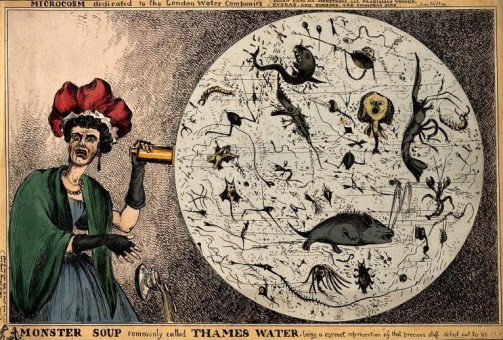
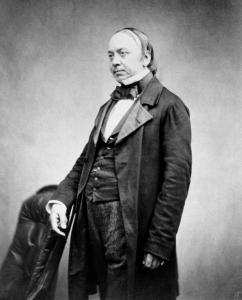
Edwin Chadwick is considered one of the great pioneers of public health. Appointed by the Royal Commission, he examined the existing Poor Laws and helped identify the factors which affected the health and illness of the urban poor. Chadwick’s aim was for people to understand that health was an issue for everyone and that prevention is better than a cure[2]. Funded and researched himself, Chadwick published “The Report from the Poor Law Commissioners on an Inquiry into the Sanitary Conditions of the Labouring Population of Great Britain” in 1842. In this report, Chadwick was able to establish a relationship between the environment that people live in and their health.
That such disease… is always found in connexion with the physical circumstances, and that where those circumstances are removed by drainage, proper cleansing, better ventilation, and other means of diminishing atmospheric impurity, the frequency and intensity of such disease is abated; and… almost entirely disappears.”[3]
This report was considered ground breaking research which pioneered the first Public Health Act of 1848. Chadwick stressed the need for legislation and that without this there will be very little progress in public health. In his report he compared the annual deaths of those who lost their lives to disease and to those who lost their lives in war, to which, he concluded, the former is far greater. The overwhelming evidence he gave in this report was too much and too detailed to be ignored or contradicted. The most important steps which Chadwick highlighted to improve the health of the public were:
- Improved drainage and provisions of sewers.
- Removal of all refuse from houses, streets and roads.
- Clean drinking water.
- Appointment of a medical officer in each town. [4]
After a severe outbreak of cholera in 1848, the government was forced to intervene and the first Public Health Act of 1848 was passed. This act established a General Board of Health who had the authority to create local boards of health when the mortality rate in the area exceeded 23 per 1000[5]. These local boards had the power to deal with water supplies, sewage, control of foods, removal of refuse and other sanitary matters. They were also responsible for appointing a medical officer of health and a sanitary inspector to their local area.
This act clearly set the stage for real sanitary improvements to be made in 19th Century Britain. However, much of these improvements would not have come about if it were not for the ‘unsung heroes’, the countless sanitary inspectors who did much of the groundwork that went into the creation of these acts. A little known pioneer, Robert Rawlinson, was one of the first sanitary inspectors to be appointed under the General Board of Health. His role as a sanitary inspector was significant in remedying ill health and mortality during the Crimean War. He is said to have visited over 100 towns to support the poverty-stricken communities and provide better water and drainage[6]. Another notable, yet forgotten, figure was Dr Thomas Shapter who published his book ‘The History of the Cholera in Exeter 1832’. This book outlines the environmental health conditions in the city as well as detailed statistical data about cholera[7]. His work was well received and was cited by John Snow, the leading physician in tracing the source of the Cholera outbreak.
It is incredibly evident to see that the hard work of sanitary inspectors both high-up and low-down in ranks were vital in bringing about real legislative change and had impacted the public health of Britain drastically. The works of Edwin Chadwick proved incredibly significant and paved the way for the first Public Health Act of 1848 to be introduced. While the countless of sanitary inspectors, most of which have had little published about them, were the ‘unsung heroes’ of public health and provided most of the groundwork which impacted public health in Britain to where we see it today.
Sources
[1] Morley, I. (2007). ‘City Chaos, Contagion, and Social Justice.’ Yale Journal of Biology and Medicine.
[2] Stewart, J. (2017). ‘Pioneers of Public Health: Lessons From History’ Routledge.
[3] Chadwick, E. (1842). ‘The Report from the Poor Law Commissioners on an Inquiry into the Sanitary Conditions of the Labouring Population of Great Britain’. W. Clowes and Sons.
[4] UK Parliament. (n.d.). The 1848 Public Health Act. [online] Available at: https://www.parliament.uk/about/living-heritage/transformingsociety/towncountry/towns/tyne-and-wear-case-study/about-the-group/public-administration/the-1848-public-health-act/
[5] Fee, E. Brown, T. M. (2005). ‘The Public Health Act of 1848’ Bulletin of the World Health Organisation.
[6] Stewart, J. (2017). ‘Pioneers of Public Health: Lessons From History’ Routledge.
[7] Stewart, J. (2017). ‘Pioneers of Public Health: Lessons From History’ Routledge.
 Derby's Dark Corners