“The filthiest place that can be imagined”[1]
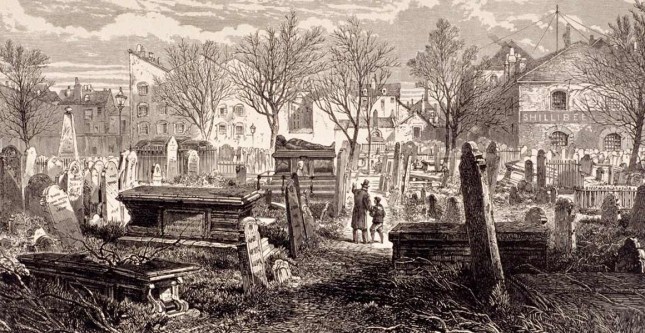
“What avails a better drainage when the sewers only form a quicker vehicle for the transit of impure gasses, which percolate through them from surrounding burial grounds?”[2]
Victorian London was a paragon for filth and dirt[3]. From the 1840s with the rise of infectious diseases, public health became an upmost concern[4]. Often when thinking about the sanitary problems in nineteenth-century London, the mind automatically goes to the sewage problems and water supply as the prime cause for diseases. However, the ever-increasing death rates of 33 per 1000 in London alone exceeded the total space allocated for burials[5]; in turn this ‘provided a profound menace to public health’[6] that has often been overlooked, as Charles Cochrane perfectly sums up above. With this increased concern over sanitation, Medical Officers of Health (MOH) were appointed to inform the Local Board of Health about sanitary concerns which were affecting the health of a district and in turn what preventative measures could be put in place[7]. It can be argued that looking at burial grounds and the improvements made during the 1850’s provides a window into the notion of MOH being “heroes of the battle for sanitary reform”[8].
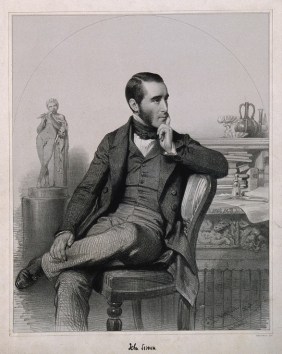
“a great man in the history of disease prevention”[9]
John Simon, the first MOH appointed for London in 1848 wrote extensively on the problems surrounding the disposal of the dead. The burial grounds within the city could no longer accommodate for the ‘tens of thousands of corpses’ each year[10]. Corpses were stacked on top of each other, in order to provide space for more bodies; due to this the ground reached above the level of the street[11]. In Simon’s 1848 report he states how this noxious burial arrangement was an unprecedented evil that was at “the expense of the living”[12], stating how the overcrowded graveyards not only caused unbearable odours and sights, but the poisonous gasses deriving from the layers of rotting corpses was the cause of “swelling our lists of death from fever and allied disorders”[13].
Enon Chapel: ‘The dubious place of worship’[14]
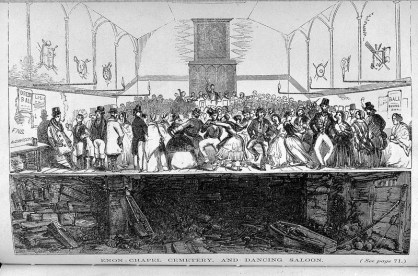
Simon mentioned that vault burials increased the chances of the noxious odours from the dead reaching inhabitants[15]. The most notorious vault burial was the Enon Chapel, opened in 1822 and run by minister Howse in St Clements London. The top was dedicated to worship, while the 59 by 29-foot basement was used as a burial[16]. With Howse charging a fee of 15 shillings for burial, Enon Chapel provided the poor with an affordable place to bury the dead[17]. In order to increase profits Howse often stacked the corpses on top of each other without coffins[18]. According to The Poor Man’s Guardian, 12,000 people had been buried beneath Enon Chapel between 1823 and 1842[19]. With this vast amount of rotting corpses in the basement and only a thin floorboard separating the vault; this resulted in a ‘putrid stench to waft through the chapel’[20]. Many churchgoers had to deal with insects lurking in their clothes and often recalled “praising the lord with a handkerchief pressed to their nostrils”[21]. It was a hub for sanitary concern.
Surgeon, George Walker noticed this connection between burial grounds being the cause for disease. In the late-1830’s he began campaigning to end ‘intramural interment’, by producing a pamphlet Gatherings from Graveyards, which refered extensively to the harmful gasses ‘emanting from rotting corpses’ causing ill-health[22].
In 1840 Walker was called in front of the ‘Health of Towns’ committee, during which he petitioned on the inhumane conditions of burial, making particular reference to the wretched state of Enon Chapel, stating how he was “quite amazed that such a place should have been permitted to exist”[23].
As Figure 3 portrays, in 1844 the chapel was converted into a dance-hall with the bodies remaining in the vault. The new owner advertised the venue with the tagline:
“‘Dancing on The Dead – Admission Threepence – No lady or gentleman admitted unless wearing shoes and stockings”[24]
Following the closure of the chapel, Walker took on a lease with the new owners in which he promised to ‘remove the accumulation of corpses and coffins’ to Norwood Cemetery[25]. Prior to the removal Walker set up an exhibition of the basement, in order for the public to see the true horrors of this ‘dubious place of worship’[26].
Through the Looking-Glass: Medical Officers of Health
Walkers efforts with regard to Enon Chapel have been seen as a catalyst for the burial problem receiving ‘detailed parliamentary scrutiny’[27]. However arguably, MOH John Simon still holds the greatest role in burial reform.
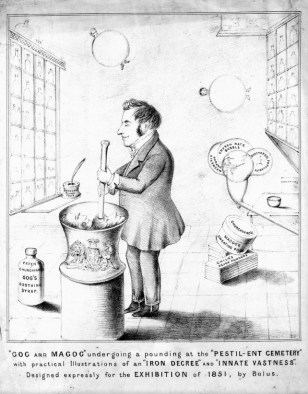
Anxieties have arisen over the view of MOH as heros, many perceived them as producing complacent reports that focused less on how to solve medical concerns, but more on minuscule matters such as drainage and soil[28]. However, the MOH’s reports are by-far complacent, within Simon’s detailed 1848 report he proposed three points for Parliament to consider with regards to the overall health of the city. He advised that all burial grounds should be remote from the City of London, no less than 35 acres in size and that no houses should be built near burial grounds, in order to provide the necessary ventilation[29]. By his third annual report in 1850 when nothing had been put in place, he further urged parliament to remove all burial grounds in order for direct “sanitary advantage of the City of London”[30].
Figure 4 is a lithograph produced in 1851 illustrating Simon “putting pressure on” the City to fix the state of graveyards. It depicts Simon pounding the heads of Gog and Magog, who according to the Book of Ezekiel are both the enemies of God and his people. To pound something means to repeatedly put pressure on something, which Simon evidently did by urging parliament in three annual reports to remove all burial grounds in London.
Similar to Simon who reported that the conditions of graveyards were a downright evil to the inhabitants of London[31], Cochrane within his article referring to the state of Enon Chapel refers to Howse as a “mammon-worshipping employer”[32]. Regardless of this negative view surrounding MOH, the fact Simon and not Walker, despite being perceived as the ‘principal agitator’[33] in burial reform, is the one depicted “pounding” the people’s enemy, which in this case are the inhumane graveyard conditions is symbolic of MOH’s significance in terms of sanitary reform; they truly were figureheads behind reform. While Walker did campaign to end ‘intramural interment’ from the late-1830’s and did dispose of the bodies in Enon Chapel, which in turn generated widespread public attention through depicting the horrors of vault burials in 1848[34], no dramatic parliamentary action was taken until the Burial Act of 1852 thirteen years after Walker began campaigning, which for once and for all prohibited all ‘burial grounds or places of burial in the metropolis’[35].
The fact MOH are the ones uniquely depicted in such ways proves Hardy’s view of MOH “spearheading the Victorian struggle against infectious diseases”[36]. Due to their continued pressure on parliament, without MOH such as Simon the unsanitary conditions of burial grounds would not have reached parliamentary level as quickly, as within just four years of Simons reports the law on burial within the metropolis had changed. They truly were “heroes of the battle for sanitary reform”[37].
[1] Alpert, Michael, London 1849: A Victorian Murder Story (Edinburgh Pearson Education Limited, 2004), p. 74.
[2] Coachrine, Charles, “Enon Chapel and Dancing Saloon”, The Poor Man’s Guardian, 4 December 1847, Available Online: https://www.bl.uk/collection-items/enon-chapel-and-dancing-saloon-from-the-poor-mans-guardian-4-december-1847 Accessed on: 26th November 2018.
[3] Jackson, Lee, Dirty Old London: The Victorian Fight Against Filth, (New Haven: Yale University Press, 2015), p. 2.
[4] Welshman, John, “The Medical Officer of Health in England and Wales, 1900-1974”, Journal of Public Health Medicine, 19:4 (1997), p. 443.
[5] Alpert, Michael, London 1849: A Victorian Murder Story, p. 73.
[6] Jackson, Lee, Dirty Old London: The Victorian Fight Against Filth, p. 106.
[7] Welcome Library. London’s Pulse: Medical Officer of Health reports 1848-1972 A new kind of Medical Professional (2018) Welcome Trust. Available at: https://wellcomelibrary.org/moh/about-the-reports/new-kind-of-medical-proffesional/ Accessed on: 15/11/2018
[8] Welshman, J., “The Medical Officer of Health in England and Wales” 1900-1974 Watchdog or Lapdog Journal of Public Health and Medicine 19:4 (1997) Page 443
[9] A. N, The Life Work of Sir John Simon, Journal of Hygiene, 5:1 (1905), p. 1.
[10] Alpert, Michael, London 1849: A Victorian Murder Story, p. 78.
[11] Cook-Starkey, Claire, ‘The Disgusting Victorian Cemetery That Helped Change Burials in London Forever’, (2018), Available online: http://mentalfloss.com/article/559169/disgusting-victorian-cemetery-helped-change-burials-london-forever Date Accessed: 15th November 2018.
[12] Simon, John “Report on the sanitary condition of the City of London for the year 1848”, (1848) Available online: https://wellcomelibrary.org/moh/report/b1824404x/6#?c=0&m=0&s=0&cv=6 p. 42.
[13] Simon, John “Report on the sanitary condition of the City of London for the year 1848”, (1848) Available online: https://wellcomelibrary.org/moh/report/b1824404x/6#?c=0&m=0&s=0&cv=6 p. 41.
[14] Jackson, Lee, Dirty Old London: The Victorian Fight Against Filth, p. 117.
[15] Simon, John “Report on the sanitary condition of the City of London for the year 1848”, (1848) Available online: https://wellcomelibrary.org/moh/report/b1824404x/6#?c=0&m=0&s=0&cv=6 p. 38.
[16] Cook-Starkey, Claire, ‘The Disgusting Victorian Cemetery That Helped Change Burials in London Forever’, (2018), Available online: http://mentalfloss.com/article/559169/disgusting-victorian-cemetery-helped-change-burials-london-forever Date Accessed: 15th November 2018.
[17] Wood, Claire, Dickens and the Business of Death, (Cambridge: Cambridge University Press, 2015), p. 173.
[18] Coachrine, Charles, “Enon Chapel and Dancing Saloon”, The Poor Man’s Guardian, 4 December 1847, Available Online: https://www.bl.uk/collection-items/enon-chapel-and-dancing-saloon-from-the-poor-mans-guardian-4-december-1847 Accessed on: 26th November 2018.
[19] Coachrine, Charles, “Enon Chapel and Dancing Saloon”, The Poor Man’s Guardian, 4 December 1847, Available Online: https://www.bl.uk/collection-items/enon-chapel-and-dancing-saloon-from-the-poor-mans-guardian-4-december-1847 Accessed on: 26th November 2018.
[20]Cook-Starkey, Claire, ‘The Disgusting Victorian Cemetery That Helped Change Burials in London Forever’, (2018), Available online: http://mentalfloss.com/article/559169/disgusting-victorian-cemetery-helped-change-burials-london-forever Date Accessed: 15th November 2018.
[21] Jackson, Lee, Dirty Old London: The Victorian Fight Against Filth, p. 117.
[22] Jackson, Lee, Dirty Old London: The Victorian Fight Against Filth, p. 115-116.
[23] Cook-Starkey, Claire, ‘The Disgusting Victorian Cemetery That Helped Change Burials in London Forever’, (2018), Available online: http://mentalfloss.com/article/559169/disgusting-victorian-cemetery-helped-change-burials-london-forever Date Accessed: 15th November 2018.
[24] Coachrine, Charles, “Enon Chapel and Dancing Saloon”, The Poor Man’s Guardian, 4 December 1847, Available Online: https://www.bl.uk/collection-items/enon-chapel-and-dancing-saloon-from-the-poor-mans-guardian-4-december-1847 Accessed on: 26th November 2018.
[25] Jackson, Lee, Dirty Old London: The Victorian Fight Against Filth, p. 125.
[26] Jackson, Lee, Dirty Old London: The Victorian Fight Against Filth, p. 117.
[27] Jackson, Lee, Dirty Old London: The Victorian Fight Against Filth, p. 117.
[28] Welcome Library. London’s Pulse: Medical Officer of Health reports 1848-1972 A new kind of Medical Professional (2018) Welcome Trust. Available at: https://wellcomelibrary.org/moh/about-the-reports/new-kind-of-medical-proffesional/ Accessed on: 15/11/2018
[29] Simon, John “Report on the sanitary condition of the City of London for the year 1848”, (1848) Available online: https://wellcomelibrary.org/moh/report/b1824404x/6#?c=0&m=0&s=0&cv=6 p. 42.
[30] Simon, John “Report on the sanitary condition of the City of London for the year 1850”, (1850) Available online: https://wellcomelibrary.org/moh/report/b18253106#?c=0&m=0&s=0&cv=0 Accessed on: 2nd December 2018.
[31] Simon, John “Report on the sanitary condition of the City of London for the year 1848”, (1848) Available online: https://wellcomelibrary.org/moh/report/b1824404x/6#?c=0&m=0&s=0&cv=6 p. 40.
[32] Coachrine, Charles, “Enon Chapel and Dancing Saloon”, The Poor Man’s Guardian, 4 December 1847, Available Online: https://www.bl.uk/collection-items/enon-chapel-and-dancing-saloon-from-the-poor-mans-guardian-4-december-1847 Accessed on: 26th December 2018.
[33] Jackson, Lee, Dirty Old London: The Victorian Fight Against Filth, p. 115.
[34] Jackson, Lee, Dirty Old London: The Victorian Fight Against Filth, p. 116.
[35] Burial Act of 1852, Available Online: http://www.legislation.gov.uk/ukpga/Vict/15-16/85/enacted Accessed on: 2nd December 2018
[36] Welshman, J., “The Medical Officer of Health in England and Wales” 1900-1974 Watchdog or Lapdog Journal of Public Health and Medicine 19:4 (1997) Page 443.
[37] Welshman, J., “The Medical Officer of Health in England and Wales” 1900-1974 Watchdog or Lapdog Journal of Public Health and Medicine 19:4 (1997) Page 443.
Illustrations
Figure 1: Illustration of a cemetery at Bunhill Fields, Finsbury, London, 1866, Available online: https://www.theguardian.com/cities/2015/jan/22/death-city-grisly-secrets-victorian-london-dead Date Accessed: 15th November 2018
Figure 2: Sir John Simon. Lithograph by C. Baugniet, 1848, Available Online: https://wellcomecollection.org/works/jq9ewhmy?query=John%20simon Accessed on: 2nd December 2018.
Figure 3: A. Walker, “Lectures on the metropolitan grave-yards”, 1847, Available on: https://wellcomecollection.org/works/bk699p3w?query=enon%20chapel Accessed on: 2nd December 2018.
Figure 4: Sir John Simon. Lithograph by C. Baugniet, 1848, Available Online: https://wellcomecollection.org/works/jq9ewhmy?query=John%20simon Accessed on: 2nd December 2018.
 Derby's Dark Corners