As my previous contributors have noted, there is a significant difference between the death and burial of those of different class and social ethics. By utilizing the case study of mural tablets and headstones and their use in memorialising the death of a loved one, this analysis will demonstrate the difference of memorialisation that working class people faced when losing a loved one in comparison to those of upper classes.
“One Body One Grave”
Catherine Robson, ‘”Where Heaves the Turf”: Thomas Hardy and the Boundaries of the Earth’, Victorian Literature and Culture, 32.2, (204), (p. 495-503).
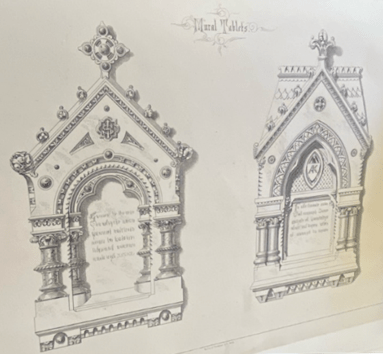
The use of mural tablets and headstones as mark of memory is key in the understanding of death and burial. Mural tablets and headstones were used as a way of marking graves; however, they were socially exclusive. Access to mural tablets and headstones was exclusive to those of upper and middle classes, as graves for the lower class, paupers, were mass unmarked graves[1]. It was not until 1857 that mass pauper graves became regulated, but also seen as socially and politically incorrect; this however does not mean that they did not exist[2]. Pauper burials were often put together by church parishes who could only afford a simple burial, and no grave marking. “The poor, of course, had always been buried with less splendour than the rich, and the very poor had, since the sixteenth century if not before, been buried at the expense of the parish”[3]. It is important to note that the lack of the marking of pauper’s graves meant that the families also had a lack of closure. Furthermore, the 1857 burial act further developed burial conditions in new graveyards; meaning that a new rule of “one body one grave” allowed paupers families to have private closure when losing a loved one[4].
Headstones and mural tablets depicted who, how and when they died, they were not only a way for the family to mourn, but also a way to create everlasting memory. Memory is key when discussing death and burial as rituals vary depending on tradition. The memorialisation of the dead through headstones and murals allows a connection to the past and the symbolisation of eternal rest[5]. Burial traditions varied between class and social ethics, mostly due to monetary differences and traditions.
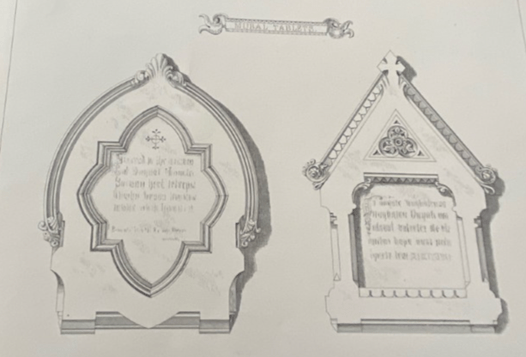
You can further explore headstones and mural tablets as material culture, by looking at them as objects. The creation of headstones and mural tablets to commemorate the dead were often sold as a bundle deal when purchasing a plot of land to be buried during the Victorian period[6]. The owners of cemeteries allowed stonemasons to move onto their property and create and design headstones and mural tablets which allowed them to bundle the funeral and the memorials dedicated to the dead together to ensure that every family was cared for[7]. The variation of carvings showcased the skill that stone masons were undertaking under the careful guide of graveyard officials. It is clear that the more money spent, the more extravagant the carvings on the mural or headstone. This further highlights the significant differences between the rich and the poor within death and burial. Furthermore, the material culture of death and burial plays a significant role in understanding how Victorians treated their dead.
Additionally, the memorialisation of the dead was significant in demonstrating the similarity between social class. As although many paupers did not have marked graves. They were memorialised in diverse ways, whether that be through caring for their keepsakes, or remembering them through their descendants[8]. It is important to note that yes, though there was a significant difference between the display of death and burial traditions due to monetary issues; people mourn in similar ways.
As my previous contributors have noted, the boom of the death and burial business allowed the blossom of distinctive styles of funerals, from mass pauper graves to high class funerals that had a family dedicated mausoleum’s. This analysis into headstones and mural tablets has demonstrated the impact class and social ethics had upon death and burial during the nineteenth century.
[1] Imogen Gerard and Kelsie Root, ‘Class beneath the Grass: Segregation within Cemeteries’, LEEDS GENERAL CEMETERY, RESEARCH, (2017), 1, available at <https://livingwithdying.leeds.ac.uk/2017/09/08/class-beneath-the-grass/> [accessed 17 January 2023].
[2] Julie-Marie Strange, ”She Cried a Very Little’: Death, Grief and Mourning in Working-Class Culture, c. 1880- 1914′, Social History, 27.2, (2002), 143-161.
[3] Thomas Laqueur, ‘Bodies, Death, and Pauper Funerals’, Representations, 1.1, (1983), 109-131.
[4] Catherine Robson, ‘”Where Heaves the Turf”: Thomas Hardy and the Boundaries of the Earth’, Victorian Literature and Culture, 32.2, (204), (p. 495-503).
[5] Julie-Marie Strange, ”She Cried a Very Little’: Death, Grief and Mourning in Working-Class Culture, c. 1880- 1914′, Social History, 27.2, (2002), 143-161.
[6] Karen Harvey, Introduction: historians, material culture and materiality, ed. by Karen Harvey (New York: Routledge, 2018), p. 1-26.
[7]Catherine Robson, ‘”Where Heaves the Turf”: Thomas Hardy and the Boundaries of the Earth’, Victorian Literature and Culture, 32.2, (204), (p. 495-503)
[8] Karen Harvey, Introduction: historians, material culture and materiality, ed. by Karen Harvey (New York: Routledge, 2018), p. 1-26.
 Derby's Dark Corners