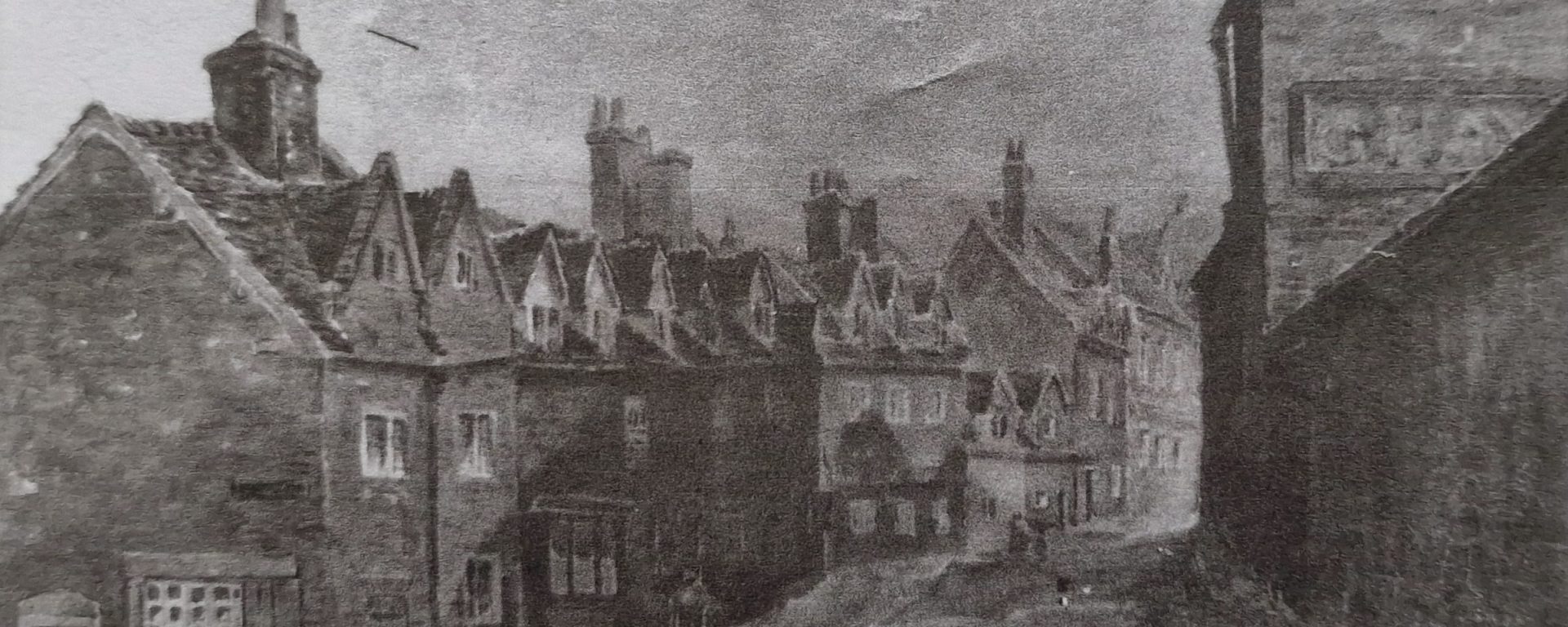
Walker Lane had one of the largest concentrations of poverty within Derby during the nineteenth century. Our research endeavours to explore the slum, and demonstrate how both wider societies, and even national agendas and bureaucracy, influenced poverty – and the continuance of poverty – on Walker Lane. Furthermore, our research will show that there was a sense of morals and society within this group of people, highlighting how they were part of the wider society and not a distinct different group.
These articles on Walker Lane are written on the topics including, bureaucracy and how local and national bureaucracy of health and welfare impact the poor of Derby. This article focuses on institutional fighting and the ramifications this has on the poorer members of Derby.
Walker Lane was not only part of the parish of All Saints, but it was also home to two parish institutions: the school and the workhouse. Both of which give incredible insight to poverty within the slums, demonstrating that Walker Lane, in many ways, was a magnet to poverty.
The public house forms a central element of a community and this is clear within nineteenth-century Walker Lane. During this period, this street housed four drinking institutions which highlighted the importance of public houses as sites of leisure for the working community, rather than merely as establishments of violence and debauchery.
The working classes were also individuals, and this individuality can be seen within the home and the domestic sphere. This area combines health and the family and how the dilapidated state of the housing stock impacted on these family groups.
Life in Walker Lane was tough to say the least, yet there was a great sense of community, and identity. Our research aims to show that these residents were victims of circumstance, class struggle and bureaucracy, challenging the Victorian notion of ‘the deserving, and undeserving poor’.
by Mark Gratton, Davina Naylor, Helen Purcell and Abie Waller
 Derby's Dark Corners