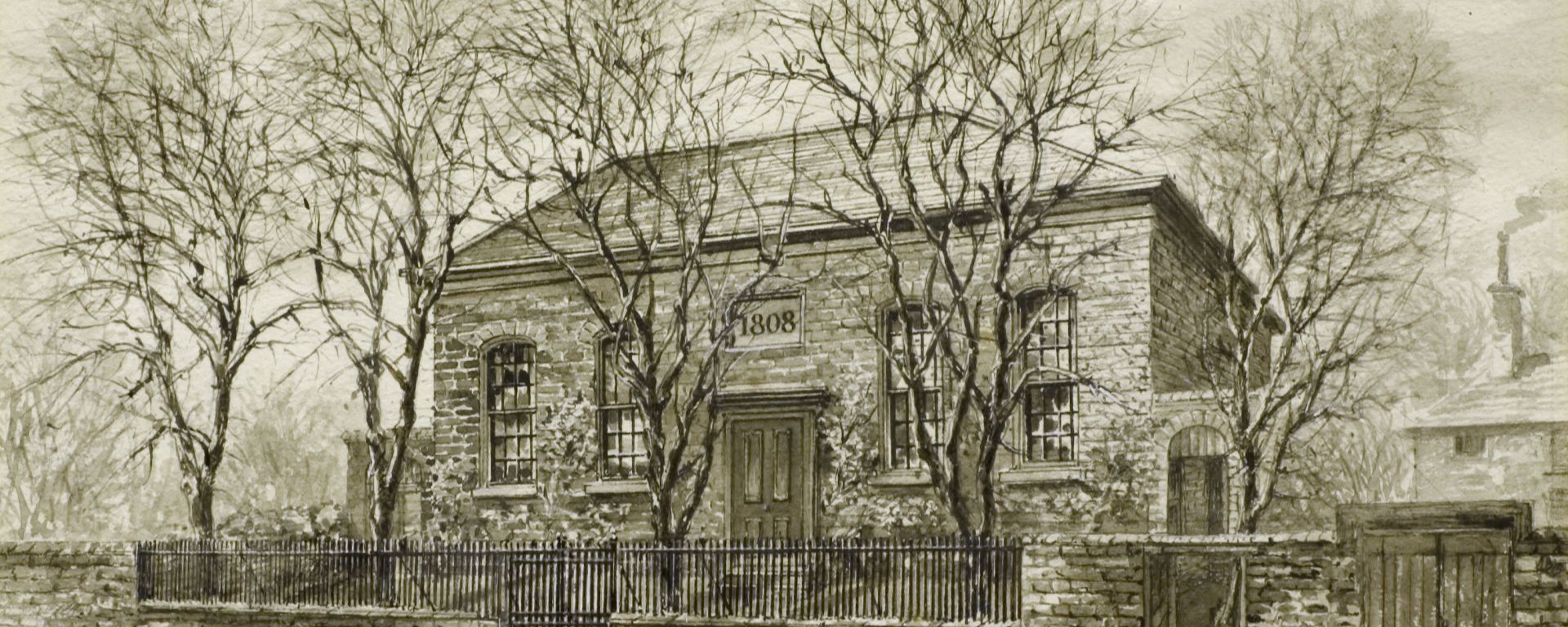
On the surface, St. Helen’s Street presented a respectable frontage, with several establishments helping contribute to this façade. One was the friendly society of the Ancient Order of Foresters establishing themselves in the street’s public house, the Joiner’s Arms, as well as businesses owned by enterprising individuals, with one such example being chronicled in case of The Derby Local Board of Health v. Minnitt.
However, behind this seemingly admirable frontispiece existed a grimmer reality. The courts behind were scenes of dilapidation and decay, as filthy as any other Victorian-era slum. Reports describe open cesspits and rampant disease plaguing the inhabitants, and occasionally, this blight leaked out into the street itself. Edward Cresy’s report describes the slums of St Helens Street, forcing the reader to imagine the dismal setting, describing slaughterhouses, disease and cramped dwellings of poor-quality construction.[1]
St. Helen’s Street is therefore an interesting case study, where absolute poverty and destitution was obscured by apparent respectability, which spawned interesting interactions between these spheres of existence.
by Ariana Fox, James Greenwood and Samuel Starsmore
[1] Cresy, Edward, Report to the General Board of Health on a preliminary inquiry into the sewerage, drainage, and supply of water, and the sanitary condition of the inhabitants of the Borough of Derby, 1849, p. 15 Available online: https://emlib.ent.sirsidynix.net.uk/client/en_GB/search/asset/162/0 Accessed December 2023
 Derby's Dark Corners